
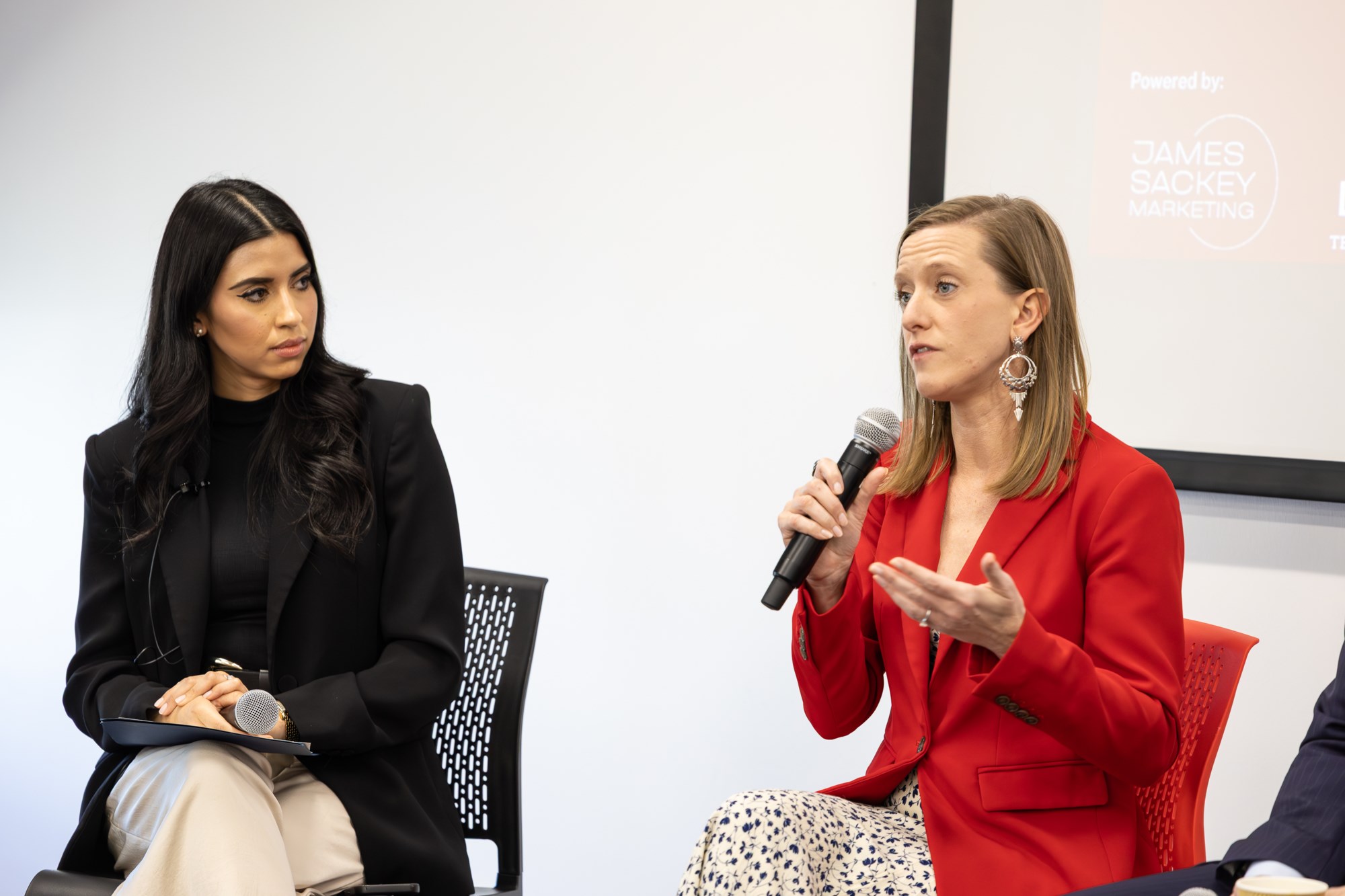
At the 2026 DFW Growth Summit, leaders across finance, infrastructure, biotech, real estate, and venture capital gathered to discuss what’s really happening in the North Texas economy.
The conversation revealed something important.
DFW isn’t facing a lack of opportunity.
If anything, the opposite is true.
The region is experiencing a surge of capital, companies, and innovation—but the real question is whether the infrastructure, talent pipelines, and policy environment can keep up.
Across five panels and dozens of speakers, several themes emerged that point to where the region is heading next.
Here are 20 signals from the front lines of the DFW economy.
1. DFW’s Growth Engine Is Still Running
Despite national economic uncertainty, North Texas continues to attract companies, capital, and talent at a remarkable pace.
Corporate relocations, venture-backed startups, and infrastructure investment all point to continued expansion across the metroplex.
The momentum remains strong.
2. Infrastructure Is the Real Constraint on Growth
Across nearly every panel discussion, the biggest risk to the region’s future wasn’t demand.
It was infrastructure.
Transportation systems, power generation, water supply, and permitting capacity are all under increasing pressure.
3. Water Is Becoming a Strategic Resource
One of the most striking comments from the infrastructure panel came from Dallas City Councilmember Paula Blackmon.
She pointed to water as the long-term constraint that could shape the region’s future.
“Water, water supply. We are on track to be the second largest region in the country. And if you don’t have water, you don’t have life.”
For a region expecting millions of additional residents over the coming decades, long-term water planning is becoming essential.
4. Power Availability Is Now a Development Issue
Data centers, artificial intelligence, and advanced manufacturing are dramatically increasing energy demand.
Large-scale projects now require enormous electrical capacity before development can even begin.
5. The Data Center Boom Is Reshaping Infrastructure
AI infrastructure is driving a new category of development: power campuses.
These projects combine data centers, energy generation, and transmission infrastructure into integrated developments.
6. Energy Production and Consumption Are Beginning to Co-Locate
Historically, electricity was generated in one place and consumed in another.
Now, developers increasingly build computing infrastructure next to energy production.
This dramatically reduces transmission constraints and improves efficiency.
7. Natural Gas Still Anchors the Grid
While renewables continue expanding, reliable 24/7 energy still depends heavily on natural gas generation.
For now, it remains the backbone of power supply for large-scale industrial and computing operations.
8. Nuclear Is Quietly Returning to the Conversation
Small modular reactors (SMRs) are increasingly discussed as a future energy solution.
For AI infrastructure and hyperscale data centers, nuclear energy may eventually provide the density and reliability required.
9. Texas Is Innovating Around Grid Stability
Texas policymakers are experimenting with new mechanisms to protect grid stability.
One such concept allows large power users like data centers to temporarily shut down during grid emergencies.
10. Logistics Infrastructure Is an Economic Driver
Transportation efficiency directly affects business performance.
Even small disruptions can ripple through supply chains.
As Olga Lopez, CEO of CIMA Logistics explained:
“A lane closure makes a tremendous difference… especially if we are on a permitted route.”
For logistics-heavy economies like DFW, infrastructure reliability matters enormously.
11. Workforce Readiness Is a Hidden Growth Variable
Many emerging industries—AI, biotech, advanced manufacturing—require specialized talent.
Regions that can train and retain that workforce will gain a major advantage.
12. Life Sciences Are Emerging as a Regional Strength
North Texas is increasingly building momentum in biotechnology and life sciences.
Regional organizations are working to accelerate commercialization and industry collaboration.
13. Universities Are Becoming Economic Engines
Institutions like Texas Tech, UT Southwestern, and others are playing a growing role in startup formation and workforce development.
Education is becoming more tightly integrated with regional economic strategy.
14. Healthcare Innovation Is Moving Toward Platform Technologies
Many biotech companies are no longer building single-product businesses.
Instead, they are developing scalable platforms capable of producing multiple therapies or solutions.
15. Venture Capital Is Becoming More Disciplined
Investors remain active, but they are increasingly selective.
Companies must demonstrate traction, capital efficiency, and strong leadership to attract funding.
16. Strategic Capital Is Replacing Speculative Capital
Investors are placing greater emphasis on operators who can build durable businesses.
As one investor panelist described it, the focus is shifting toward founders who can execute—not just pitch.
17. Artificial Intelligence Is Reshaping Nearly Every Industry
AI is no longer confined to technology companies.
It is rapidly becoming embedded across healthcare, finance, infrastructure, and logistics.
18. Regulation and Permitting Are Slowing Development

Several panelists noted that permitting timelines and zoning processes can slow projects dramatically.
Councilmember Blackmon highlighted the challenge candidly.
“In the city of Dallas it can take almost 18 months… and we all know that time is money.”
For developers and investors alike, regulatory efficiency is becoming a competitive factor.
19. Public and Private Collaboration Is Critical
No single sector can solve these challenges alone.
Infrastructure development, workforce training, and innovation ecosystems require collaboration between governments, investors, and businesses.
20. The Most Important Investments May Be Invisible
Some of the most critical projects for DFW’s future will not generate headlines.
Power transmission lines.
Stormwater systems.
Freight corridors.
Water infrastructure.
These quiet investments will determine whether the region can sustain its growth.
The Big Picture
Across every discussion at the summit, one theme emerged repeatedly.
DFW’s challenge is not attracting opportunity.
The region already has capital, talent, and momentum.
The real question is whether it can build the infrastructure, workforce, and policy environment fast enough to support the next phase of growth.
If it can, North Texas will remain one of the most dynamic economic regions in the country.
If it cannot, growth will begin to strain the very systems that made the region successful.
Either way, the signals are clear.
The next chapter of the DFW economy is already being written.


Leave a Reply