
For years, the story of Dallas–Fort Worth has been simple.
Population growth.
Corporate relocation.
Capital inflows.
Rinse and repeat.
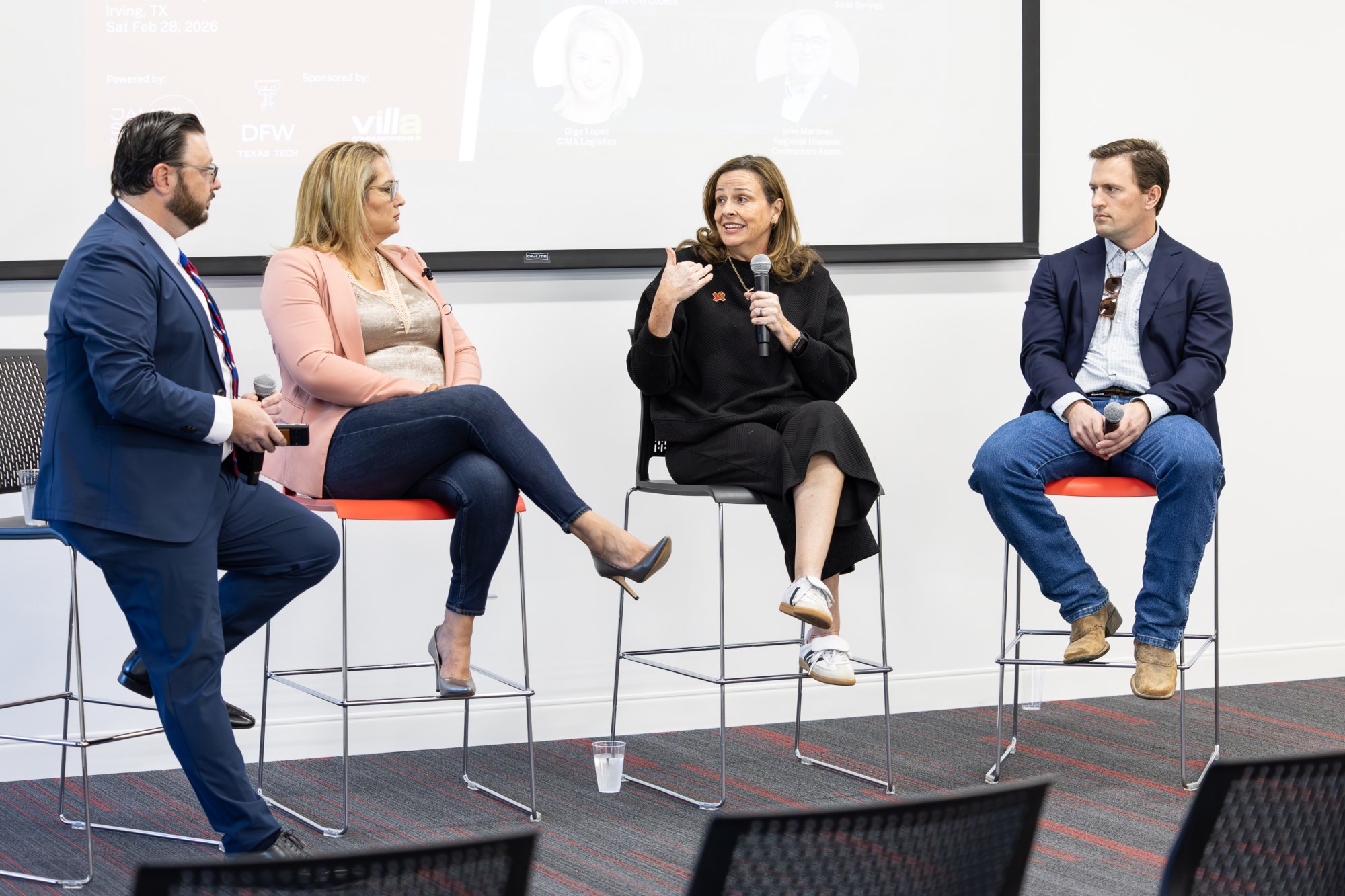
But at the 2026 DFW Growth Summit, a different narrative emerged—one that matters far more for investors, operators, and dealmakers.
DFW doesn’t have a demand problem.
It has an infrastructure problem.
Across transportation, water, energy, and public systems, the region is beginning to feel the strain of its own success. And increasingly, these constraints are not theoretical—they are directly impacting business operations, development timelines, and investment decisions.
The takeaway is clear:
Infrastructure is no longer a background variable. It is now a primary driver of economic growth—and in many cases, the limiting factor.
Water: The Constraint No One Is Talking About Enough
While most conversations about growth focus on land, labor, or capital, the infrastructure panel surfaced a more fundamental issue.
Water.
Councilwoman Paula Blackmon put it bluntly:
“Water, water supply. We are on track to be the second largest region in the country. And if you don’t have water, you don’t have life.”
DFW’s long-term expansion depends on its ability to secure, store, and distribute water at scale.
This isn’t just a municipal issue—it’s an economic one.
Water powers everything from residential growth to industrial development to data center expansion. And as the region pushes toward becoming one of the largest metros in the country, water planning is becoming a strategic priority.
For investors and developers, this raises a critical question:
Can the infrastructure support the growth being underwritten?
Power: The New Gatekeeper of Development
If water is the long-term constraint, power is the immediate one.
The explosion of AI, data centers, and advanced industrial activity is placing unprecedented demand on the grid.
Philip Wagley of Soda Springs Capital Partners framed it in simple terms:
“You need to create an electron, and then you need to move that electron to the campus.”
That challenge—generation and transmission—is becoming increasingly difficult.
Grid congestion, limited transformer capacity, and the need for baseload power are all constraining new development. In some cases, projects are being delayed not because of financing or demand, but because power simply isn’t available.
What’s emerging is a shift in how infrastructure is approached.
Instead of building where people want to consume energy, developers are beginning to build where energy can be produced—and co-locating demand alongside it.
This has massive implications for:
• site selection
• real estate strategy
• industrial development
• and long-term investment theses
Transportation: Small Problems, Big Consequences
While power and water dominate headlines, transportation remains a critical—and often underestimated—factor in economic performance.
From a logistics perspective, even minor disruptions can have outsized impacts.
Olga Lopez, founder of CIMA Logistics, made this point clearly:
“A lane closure makes a tremendous difference… especially if we are on a permitted route.”
In a region like DFW—where logistics, distribution, and freight are core economic drivers—efficiency is everything.
A single lane closure can delay shipments, disrupt schedules, and create cascading operational issues across supply chains.
This highlights an important reality:
Infrastructure doesn’t need to fail completely to impact business—it just needs to degrade slightly.
Permitting and Policy: The Invisible Bottleneck
One of the most consistent themes from the panel was the role of public sector processes in slowing development.
Permitting timelines, zoning constraints, and bureaucratic inefficiencies are often the biggest barriers to progress.
Blackmon acknowledged this challenge directly:
“In the city of Dallas, it takes almost like 18 months… and we all know that time is money.”

For developers and investors, time is one of the most critical variables in any project.
Delays increase costs, introduce uncertainty, and can ultimately derail otherwise viable opportunities.
What makes this particularly challenging is that many municipal systems are not designed for the pace of growth DFW is currently experiencing.
As Blackmon explained, cities are often forced to focus on immediate issues rather than long-term planning:
“We are dealing with fires today, and it’s really hard to think about strategy and being future-ready.”
Infrastructure Is No Longer Just Physical
Another key shift highlighted during the panel is how infrastructure is being redefined.
It’s no longer just roads, pipes, and power lines.
It now includes:
• workforce readiness
• freight connectivity
• energy access
• and operational efficiency
Lopez captured this broader perspective when discussing what “future-ready” really means:
“Do we have the people?… Are they skilled? Are they certified? Do they understand the new things that are coming?”
In other words, infrastructure is becoming a holistic concept—one that blends physical systems with human capital.
The Rise of “Invisible” Infrastructure
Perhaps the most important insight from the panel is that the infrastructure that matters most is often the least visible.
Stormwater systems.
Transmission lines.
Freight corridors.
Water pipelines.
These aren’t headline-grabbing projects.
But they determine whether a region can scale.
When asked about the most important long-term investments, the answers reflected this reality.
Philip Wagley was direct:
“Power. Anything power.”
Olga Lopez focused on logistics:
“Speed routes, corridors, movement.”
And Blackmon pointed to regional connectivity:
“Expanding Love Field… what that means for our region is pretty significant.”
Each answer highlights a different dimension of the same truth:
Growth is only as strong as the systems that support it.
What This Means for Dealmakers
For JSM’s audience—private equity firms, lenders, advisors, and operators—this shift has real implications.
Infrastructure is no longer a secondary consideration.
It is a core part of:
• diligence
• underwriting
• risk assessment
• and strategic planning
A deal that looks attractive on paper can quickly become problematic if:
• power is unavailable
• water capacity is constrained
• permitting timelines are uncertain
• or transportation inefficiencies impact operations
In other words:
Infrastructure risk is now deal risk.
The Bottom Line
DFW’s growth story isn’t slowing down.
But it is evolving.
The next phase of expansion won’t be defined by how much capital flows into the region.
It will be defined by whether the region can build fast enough to support that growth.
And increasingly, that answer will determine:
• which deals get done
• which projects move forward
• and which companies choose to scale here
The implication is clear.
The next bottleneck in DFW growth isn’t capital.
It’s infrastructure.


Leave a Reply